
How Long Does Physical Therapy Take to Work for Common Injuries?

If you are a CrossFit athlete in Cary or a dedicated runner training for your next race, an injury can feel like a complete roadblock. You want to know one thing: how soon can you get back to the barbell or the trail? The frustration of resting an injury only for it to flare up the moment you resume training is a common experience for high-performance individuals.
At Ground to Overhead Physical Therapy, we understand that you are not just looking to walk without pain. You want to squat, sprint, and compete at your highest possible level. Determining how long physical therapy takes to work requires looking at your body through the lens of performance, not just basic daily function.
Understanding Recovery Timelines for High-Performance Athletes
For the average person, recovery might mean being able to go to the grocery store without a limp. For you, recovery means a snatch PR or completing a long-distance race. This distinction significantly impacts your timeline.
True recovery for an athlete involves restoring peak function, building power, and ensuring the injured tissue can handle the specific demands of CrossFit or high-level endurance sports. Our goal with performance physical therapy in Cary, NC is to bridge the gap between pain-free and performance-ready. While your pain might subside within a few sessions, the full rehabilitative process continues until your movement patterns are robust enough to prevent the injury from returning.

Factors That Influence Your Physical Therapy Timeline
Every body is different, and several variables dictate how quickly you will progress through your program at Ground to Overhead Physical Therapy.
Severity and type of injury: A minor muscle strain typically heals much faster than a chronic tendon issue or a ligament tear.
Consistency: Adherence to your personalized movement plan is the biggest driver of success. Those who stay consistent with their corrective exercises generally see results faster.
Biological healing times: Soft tissues like muscles, tendons, and ligaments have natural healing windows that cannot be skipped, though they can be optimized through expert care.
Addressing the root cause: Resolving pain is only the first step. Identifying and correcting underlying mobility or stability deficits is what prevents the injury from coming back.
Common Injury Recovery Estimates
While timelines are highly individual, here are general estimates for common conditions treated at our Cary clinic.
Runner's Knee (Patellofemoral Pain)
Most athletes see significant improvement in 4 to 8 weeks by focusing on hip strength and running mechanics. A Running Gait Analysis can help identify the movement patterns contributing to the problem and accelerate your return to running.
Shoulder Impingement and Rotator Cuff Pain
Shoulder conditions often take 6 to 12 weeks, as they require retraining the rotator cuff and scapular stabilizers to handle overhead loads safely. This is especially relevant for athletes performing snatches, overhead presses, or pull-ups.
Acute Low Back Pain
Non-complex low back pain can feel significantly better in 2 to 4 weeks, with a full return to heavy lifting typically occurring within 6 to 8 weeks, depending on the underlying cause.
Achilles Tendinopathy
Tendons take longer to adapt than muscles. Expect a 10 to 12-week window to fully remodel the tissue for high-impact activities like running and jumping.
Ankle Sprains
Mild to moderate ankle sprains often respond well within 4 to 6 weeks, particularly when balance and proprioception training is incorporated early to restore joint stability.
Why One-on-One Performance Physical Therapy Moves Faster
Traditional physical therapy often involves being handed off to an assistant or sharing your therapist's time with multiple patients. This model slows down your progress and limits the quality of care you receive.
At Ground to Overhead Physical Therapy, every appointment is a dedicated, one-on-one session focused entirely on your recovery and performance goals. This means every minute is spent on high-level manual therapy, movement correction, and performance coaching rather than waiting for attention. That focused approach allows us to accomplish in fewer visits what can take months in a conventional clinic setting.
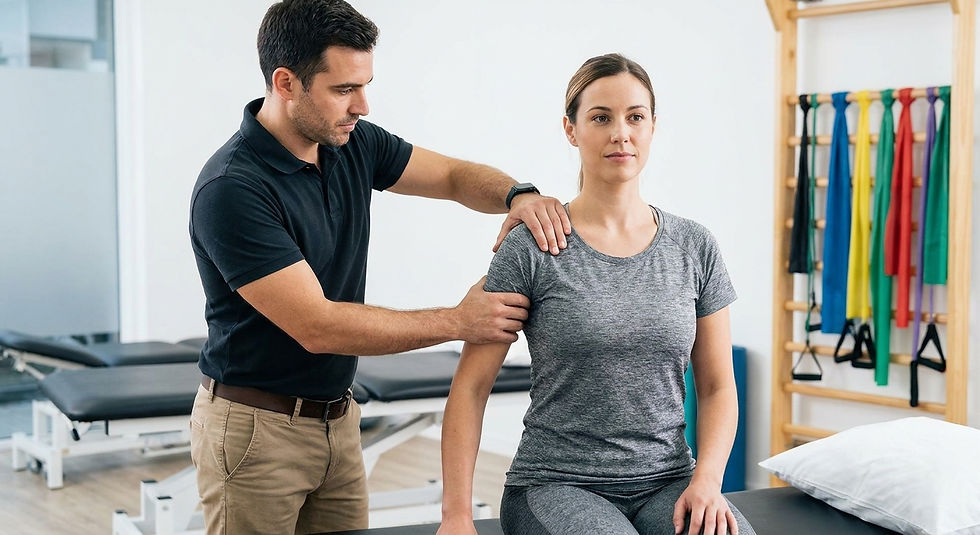
Advanced Modalities That Help You Recover Faster
To help you work within and optimize your natural healing timeline, Ground to Overhead Physical Therapy incorporates advanced treatments that go well beyond basic stretching.
Dry Needling
Dry needling is a powerful tool for releasing deep muscle trigger points and resetting the nervous system. By reducing muscle tension and pain rapidly, it allows us to move you into active strengthening phases sooner than traditional approaches alone.
Blood Flow Restriction Training
Blood flow restriction (BFR) training is a significant advantage for injured athletes. BFR allows us to facilitate muscle strength and hypertrophy gains using very light loads, meaning we can keep you building strength without placing undue stress on a healing joint or tendon. This is especially valuable for preventing muscle loss during the early stages of recovery from knee injuries, Achilles tendinopathy, and post-surgical rehabilitation.
Manual Therapy and Soft Tissue Work
Techniques including myofascial release, soft tissue mobilization, IASTM, and cupping are used to restore tissue mobility, reduce pain, and prepare the body for progressive loading. These hands-on approaches complement your therapeutic exercise program and help you move better, faster.
Return-to-Sport Testing: Knowing When You Are Truly Ready
One of the most overlooked aspects of recovery is knowing when it is actually safe to return to full training. Returning too soon is one of the leading causes of re-injury.
Ground to Overhead Physical Therapy uses Return-to-Sport Testing and Functional Movement Assessments to objectively measure your readiness before clearing you for full activity. This data-driven approach removes the guesswork and gives you the confidence to train hard without fear of setback.
Start Your Recovery at Ground to Overhead Physical Therapy in Cary
You do not need a physician's referral to begin getting better. With direct access physical therapy, you can start your recovery immediately. Whether you are managing a nagging shoulder, a sudden ankle sprain, IT band syndrome, or chronic low back pain, a thorough evaluation is the only way to know exactly how long your path back to performance will take.
Ready to stop guessing and start training with confidence again? Contact Ground to Overhead Physical Therapy in Cary today to schedule your evaluation. We will build a clear, step-by-step roadmap to get you back to the activities you love, performing better than before.


Comments